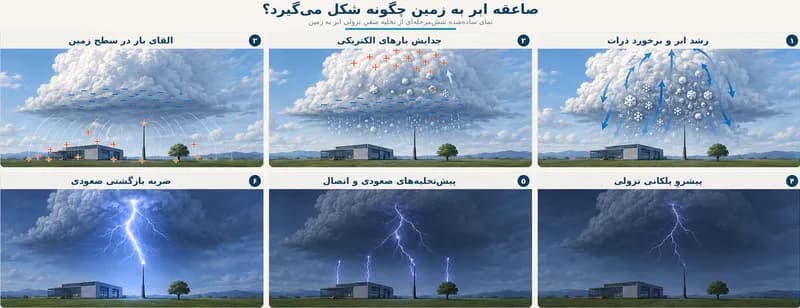
Lightning is a natural phenomenon caused by an electrical discharge in the atmosphere, occurring between clouds and the ground or between two different clouds. It forms through a complex process that includes the buildup of electric charge in storm clouds, ultimately resulting in an electrical discharge through the air. The intensity of this discharge can cause severe damage to structures and electrical equipment and pose a serious threat to human safety.
The nature and intensity of a lightning strike depend on the amount and polarity (positive or negative) of the electric charge involved. The redistribution of electric charge within a cloud occurs as warm, moist air masses move within it. As charge accumulates, the potential difference eventually becomes large enough to overcome the insulating resistance of the air. For example, if the lower part of a cloud carries a negative charge and is close to the ground, a strike occurs between the cloud and the ground — this is called negative cloud-to-ground lightning, the most common type of cloud-to-ground strike. Other types of lightning form through the same basic mechanism, though the charge polarity or direction of travel may differ.
Lightning can generate voltages of up to about 100,000,000 (one hundred million) volts, and current intensities from lightning strikes exceeding 200,000 (two hundred thousand) amperes have been recorded.
Lightning is an extremely hot phenomenon — it heats the surrounding air molecules to as much as 30,000°C. At that temperature, air molecules begin to glow, which is what we perceive as the visible flash of lightning.
Main Types of Lightning
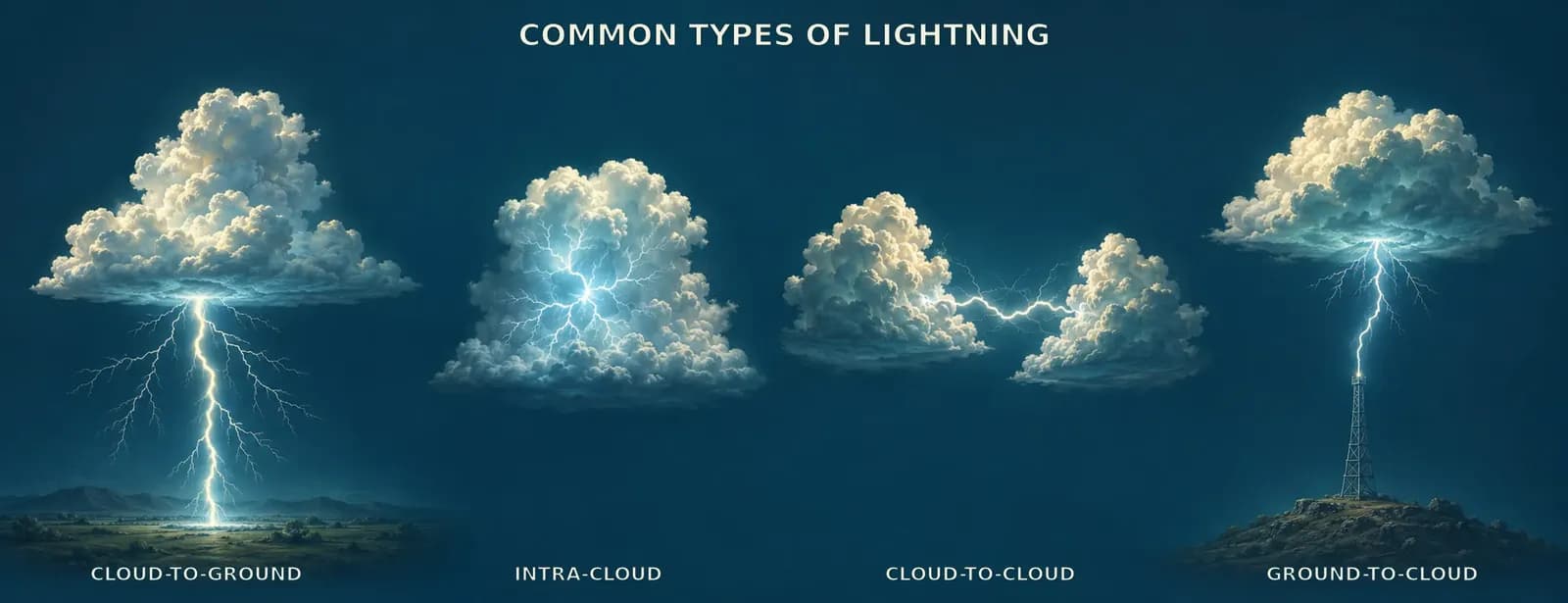
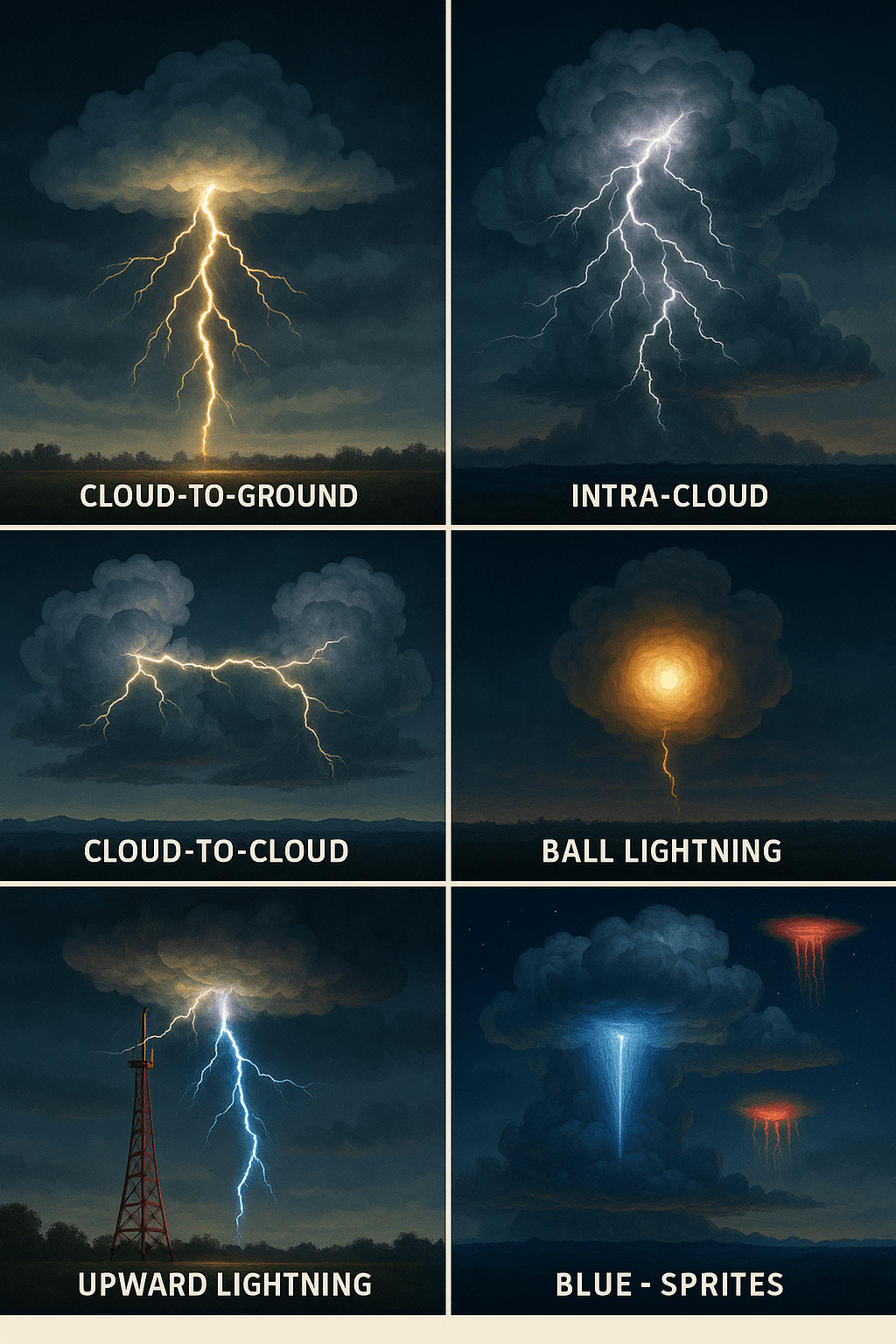
1. Cloud-to-Ground Lightning (CG)
- The most common type of lightning
- Transfers electric charge from a cloud to the ground
- The most dangerous type for people and structures
2. Intra-Cloud Lightning (IC)
- Occurs mostly within a single cloud
- Appears as widespread illumination across the sky
- The most common type of lightning worldwide (~50% of occurrences)
3. Cloud-to-Cloud Lightning (CC)
- Transfers electric charge between two or more clouds
- Appears in the sky as long streaks of light
Rare Types of Lightning
4. Ball Lightning
- Extremely rare and uncommon
- Appears as a floating, glowing sphere
- May last a few seconds before disappearing
5. Upward Lightning
- Instead of descending from a cloud, it travels upward from the tips of towers or masts
- Typically occurs in mountainous areas and around tall structures
6. Blue Jets
- A rare electrical discharge launched from the top of storm clouds toward the stratosphere
- Bright blue in color
7. Elves and Sprites
- Extremely rare optical phenomena occurring high above storm clouds
- Sprites are reddish-pink and resemble a jellyfish or ghostly figure
- Elves are short-lived rings of light at very high altitude
Lightning Damage
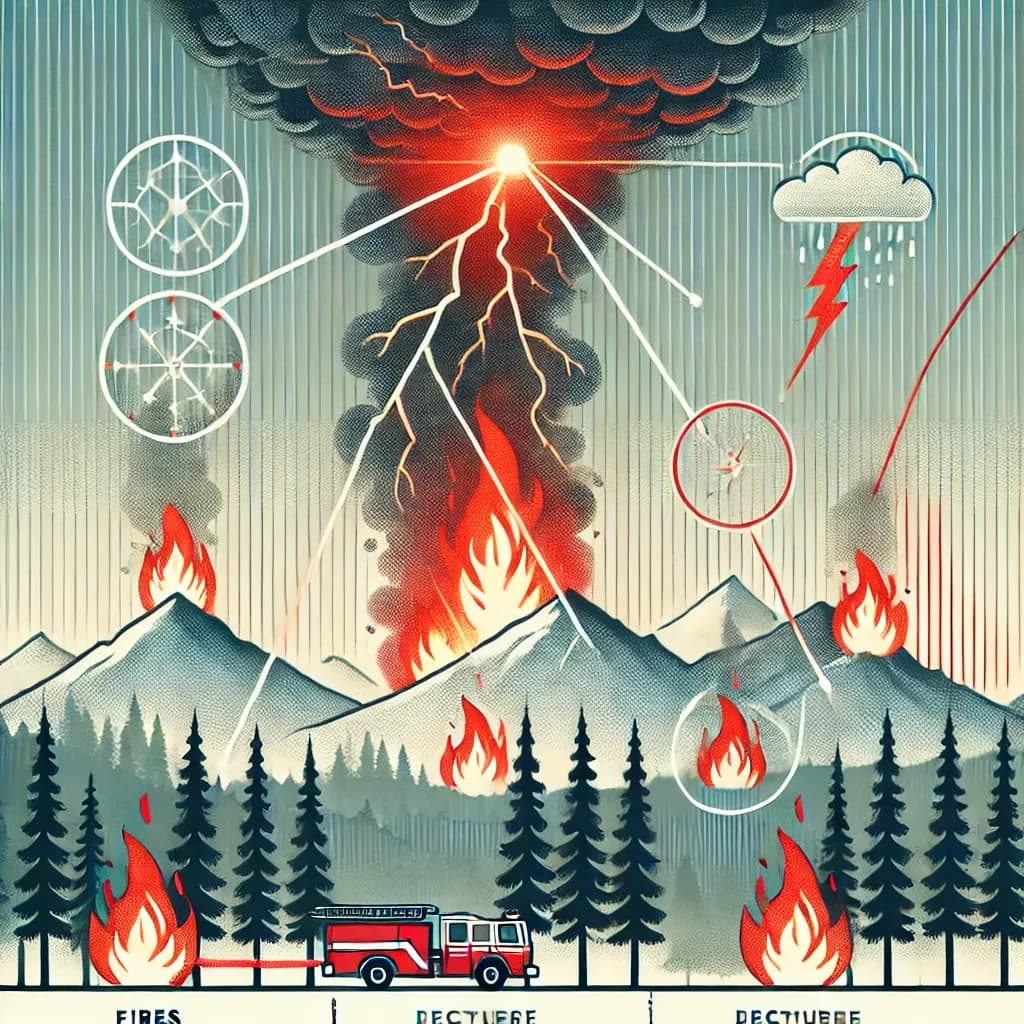
Lightning can cause extensive damage to buildings, electrical equipment, and telecommunications systems. Key risks include damage to electrical systems, fires caused by electrical discharge, and even loss of life.
Protection Methods Against Lightning
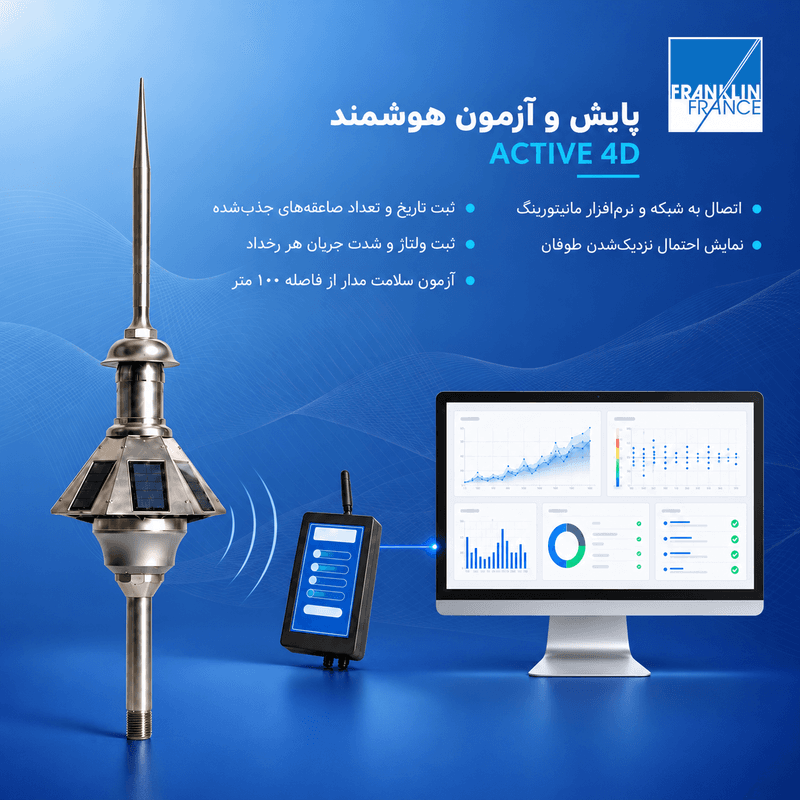
To prevent damage caused by lightning, using protective systems such as lightning rods, earthing, and surge arresters in buildings and facilities is essential. These systems effectively absorb the electrical energy from a lightning strike and prevent it from reaching sensitive components.