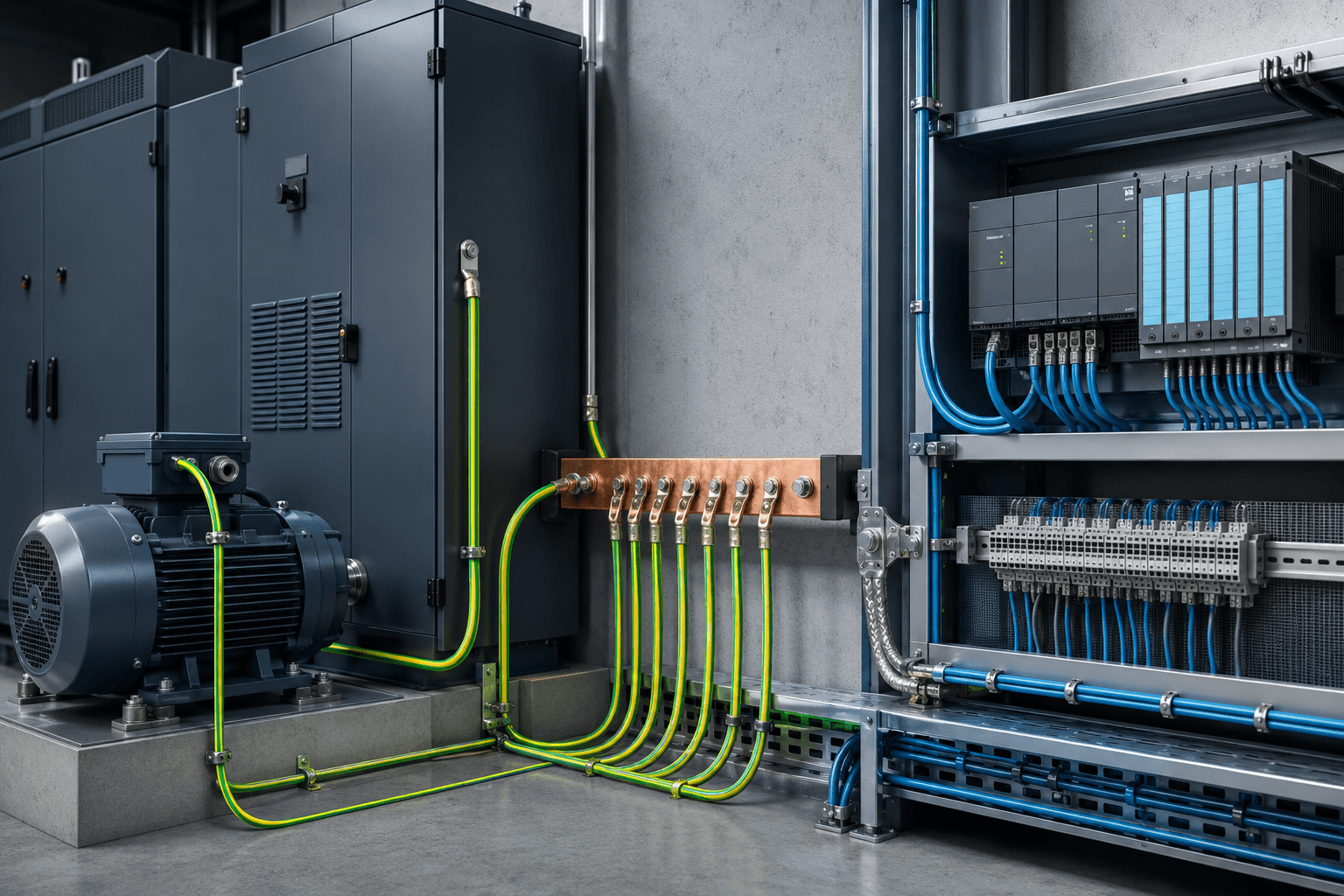
Protective Earthing (PE)
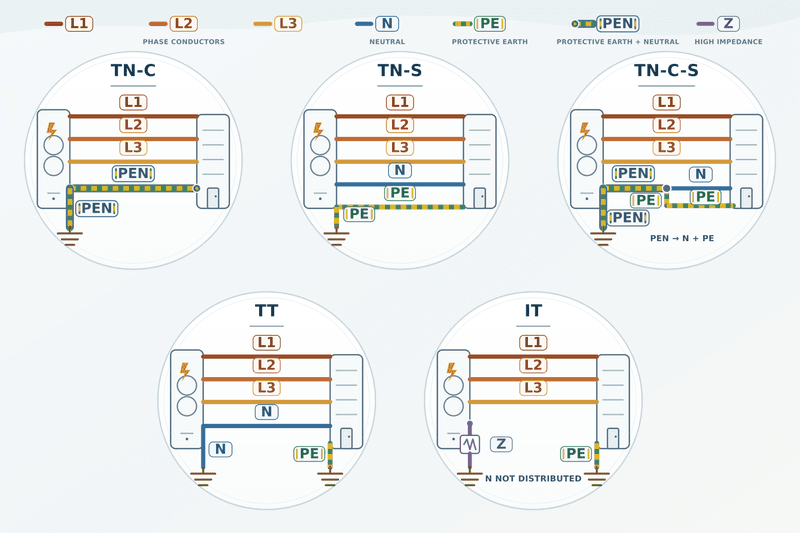
Protective earthing connects every metal part of an electrical installation that is not normally current-carrying (appliance casings, switchboards, equipment frames) to earth. Its purpose is personal safety and equipment protection against electric shock and fault-to-body connections.
If a phase-to-body fault occurs, the fault current travels to earth via the earth wire, tripping protective devices (fuse or RCD) and clearing the circuit. Related standards: IEC 60364, IEC 62305, DIN VDE 0100.
Example: a refrigerator, washing machine, or industrial switchboard casing must always be connected to protective earth.
Functional Earthing (FE)
Functional earthing connects a point in an electrical circuit or equipment to earth for correct system operation, not personal safety — its purpose is stable circuit operation and a voltage reference.
Typically the neutral point of a transformer or generator is earthed, stabilizing phase voltages and reducing electromagnetic noise. Related standards: EN 50310, IEC 61000 (EMC standards).
Example: in data-center networks, functional earthing is used to reduce noise and establish a voltage reference.